

• The Air Isn’t Fair

    The Air Isn’t Fair

    The chants of “I can’t breathe” have faded from our streets, but there are many who still suffer from polluted air in our communities, homes, and schools.

    Cool Green Schools is creating a network of air quality monitoring at schools across different communities in Maryland. We are offering over 200 air quality monitors to schools so their students can study the indoor and outdoor air quality at their schools.

    We don’t stop there. We help students to identify and reduce asthma triggers, how to build low-cost air filters, and how to benchmark the environmental conditions at their schools and homes.

    Why is this important?

    The health of our students doesn’t start or end at our school doors. When our students learn to identify and reduce asthma triggers at school, they can create healthier conditions as their schools and apply these skills to their homes, where they spend even more of their time.

    What can we gain?

    Students will learn to study and improve their environments with professional tools and scientific methods.

    We expect to lower asthma-related absences and improve student performance.

    Our network of monitors will give us a much better understanding of air quality in different neighborhoods and schools.

    To join this project, please contact:

    Shan Gordon Cool Green Schools cell: 410-336-8239 shan@coolgreenschools.org

  • Celebrating Earth Day Gifts

    The chants of “I can’t breathe” have faded from our streets, but there are many who still suffer from polluted air in our communities, homes, and schools.

    Cool Green Schools is creating a network of air quality monitoring at schools across different communities in Maryland. We are offering over 200 air quality monitors to schools so their students can study the indoor and outdoor air quality at their schools.

    We don’t stop there. We help students to identify and reduce asthma triggers, how to build low-cost air filters, and how to benchmark the environmental conditions at their schools and homes.

    Why is this important?

    The health of our students doesn’t start or end at our school doors. When our students learn to identify and reduce asthma triggers at school, they can create healthier conditions as their schools and apply these skills to their homes, where they spend even more of their time.

    What can we gain?

    Students will learn to study and improve their environments with professional tools and scientific methods.

    We expect to lower asthma-related absences and improve student performance.

    Our network of monitors will give us a much better understanding of air quality in different neighborhoods and schools.

    To join this project, please contact:

    Shan Gordon Cool Green Schools cell: 410-336-8239 shan@coolgreenschools.org

  • Community Research: A Catalyst for Social Impact?

    The chants of “I can’t breathe” have faded from our streets, but there are many who still suffer from polluted air in our communities, homes, and schools.

    Cool Green Schools is creating a network of air quality monitoring at schools across different communities in Maryland. We are offering over 200 air quality monitors to schools so their students can study the indoor and outdoor air quality at their schools.

    We don’t stop there. We help students to identify and reduce asthma triggers, how to build low-cost air filters, and how to benchmark the environmental conditions at their schools and homes.

    Why is this important?

    The health of our students doesn’t start or end at our school doors. When our students learn to identify and reduce asthma triggers at school, they can create healthier conditions as their schools and apply these skills to their homes, where they spend even more of their time.

    What can we gain?

    Students will learn to study and improve their environments with professional tools and scientific methods.

    We expect to lower asthma-related absences and improve student performance.

    Our network of monitors will give us a much better understanding of air quality in different neighborhoods and schools.

    To join this project, please contact:

    Shan Gordon Cool Green Schools cell: 410-336-8239 shan@coolgreenschools.org

  • The Air Isn’t Fair

    The Air Isn’t Fair

    After protest chants of “I can’t breath!,” have faded from our streets, we can look at another important social and equity issue: Poor Indoor Air Quality (IAQ) affecting millions of students in our schools. For decades, schools–especially schools in low income districts–have been failing to provide students with the level of air quality which we…

  • Celebrating Earth Day Gifts

    Comments comments

Learning about the Real Stuff

In a room filled with scientists, researchers and government officials, two seniors from City College High School, Nil Walker and Cameron Potts are answering questions about their summer research project. They explain how they collected and counted mosquito larvae, tested the water quality and velocity in local steams and counted pollinators. Potts tells how they used timothy grass immersed in water to attract mosquitoes and how they detected leaking sewage in the Gwynns Falls. “First it smelled like outdoors, then it smelled like eggs, then it smelled like the real stuff, he says, wrinkling up his face at the thought of the “ real stuff” in the stream.
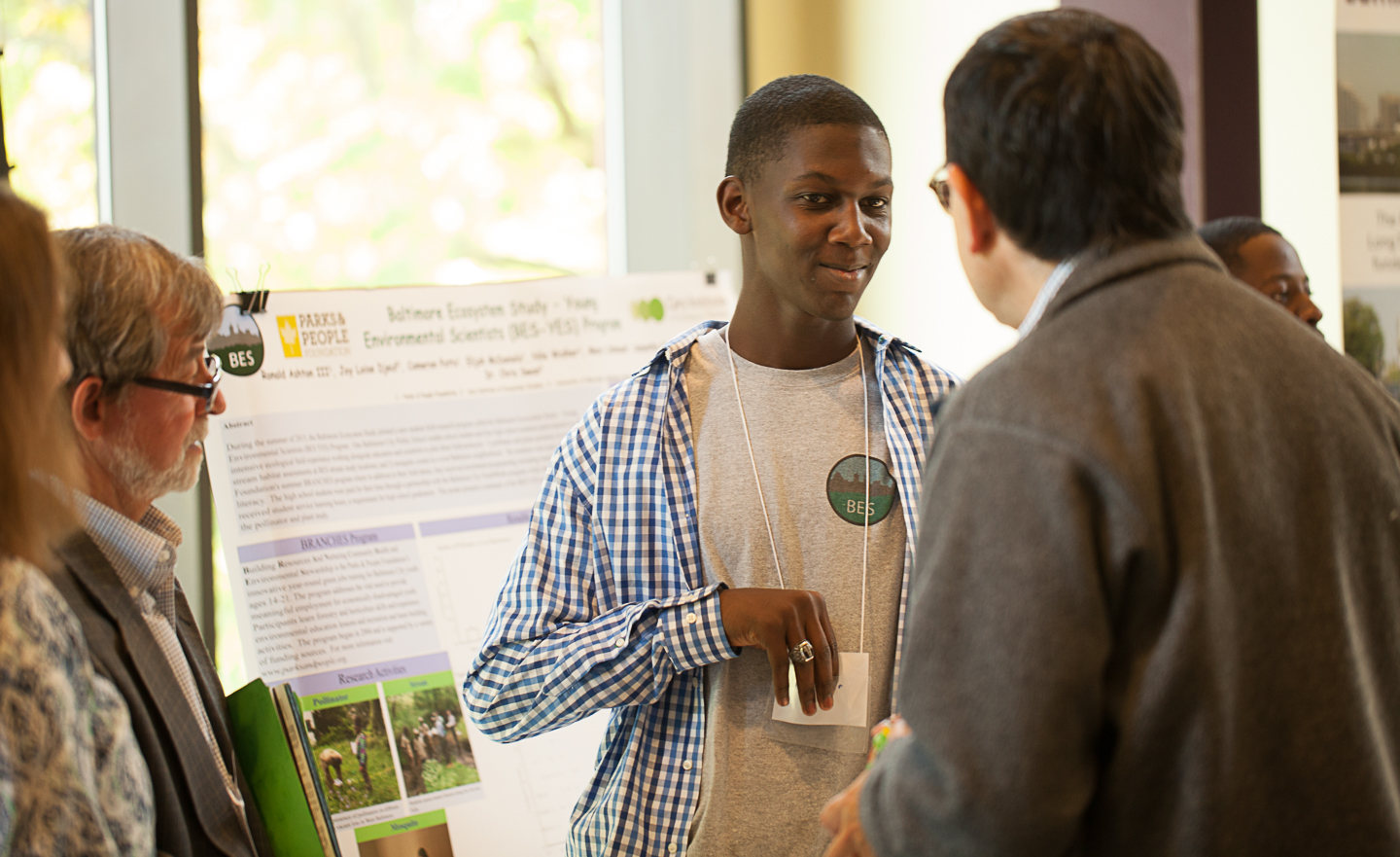
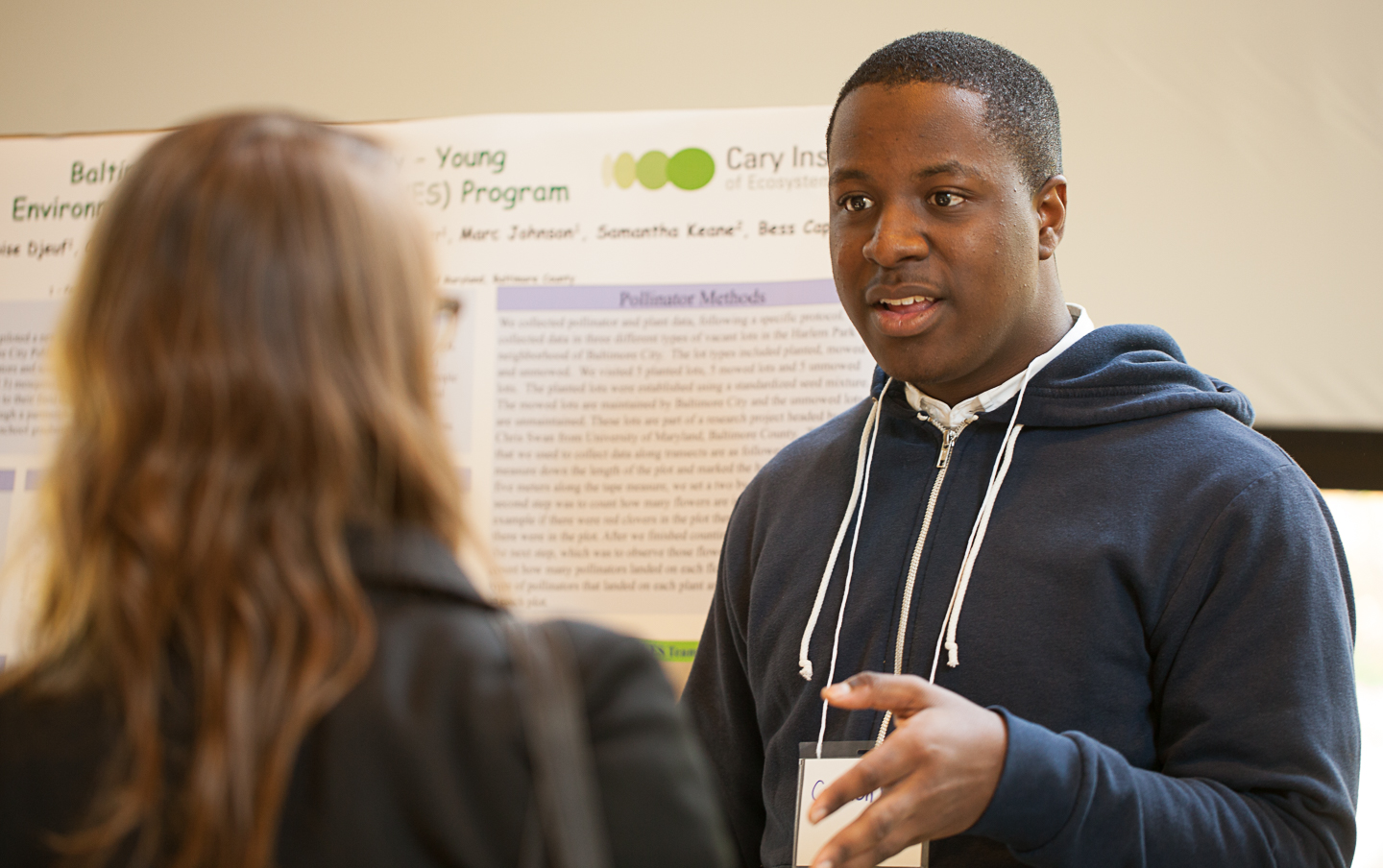
IMG_0026 by Shan Gordon.
Nil Walker, a senior at City College High School in Baltimore, talks about his environmental research and his college plans at the Baltimore Ecosystem Study annual meeting.
IMG_0015 by Shan Gordon.
Cameron Potts, a senior at City College High School in Baltimore discusses his summer research with the Young Environmental Scientist program, YES-BES.

Potts lights up as he talks about this research. “If I had found out about this earlier, I would have joined as a freshman.” “I want to learn this stuff to be able to help my community,” Potts said.
Professors and researchers are leaning in, asking where they want to go to college, handing out their cards.

Bob Shedlock, a retired researcher from USGS shook hands with the students. We don’t feel like there are enough people working in our field. We want to encourage them, he said.
While Baltimore simmered through a summer marked with conflict, these students spent five weeks doing real science to help understand and improve our environment and our community.
The program, YES BES, is a youth outreach program run by the Baltimore Ecosystem Study. This summer it paid 20 students to do environmental studies in the Baltimore area.
The program is searching for funding for the upcoming summer. If you would like to support this program or know someone or some organization who would, please contact Bess Caplin at 410-455-1863 caplanb@caryinstitute.org
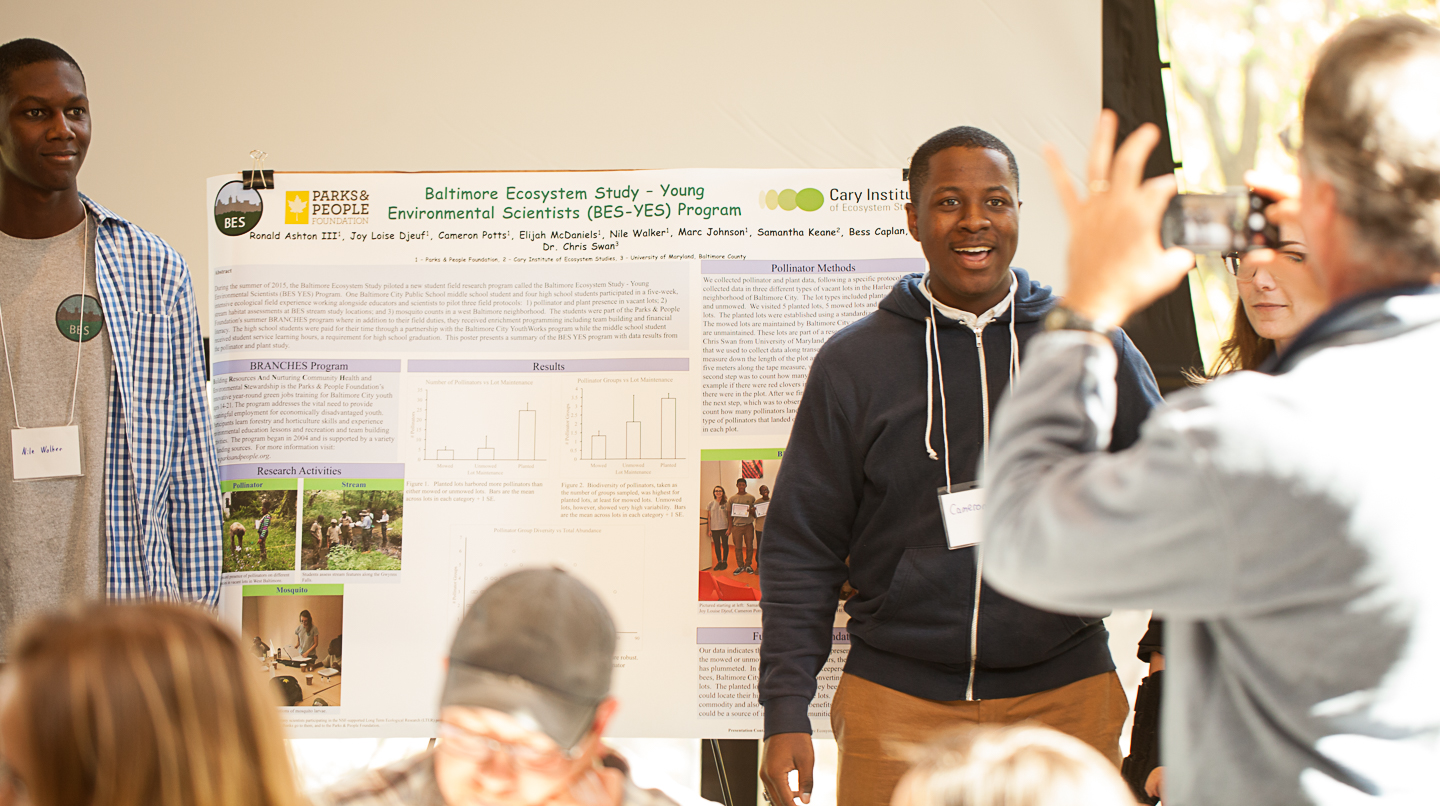
IMG_0008 by Shan Gordon.
Alan Berkowitz photographs Nil Walker and Cameron Potts, seniors at City College High School in Baltimore, with their poster on the ecological research they did this summer in the Young Environmental Scientist program sponsored by the Baltimore Ecosystem Study. Berkowitz is BES Education Team Leader with the Institute of Ecosystem Studies.

The Annual meeting of the Baltimore Ecosystem Study continues today at the Cylburn Arboretum Vollmer Center at 4915 Greenspring Avenue, Baltimore, MD 21209 from 9am –noon.
A reception featuring art and design connected to ecological research in the Baltimore area is 5:30-8pm at 16 W North Avenue, Baltimore, 21201

Comments

comments


Comments

Leave a Reply

Your email address will not be published. Required fields are marked *

This site uses Akismet to reduce spam. Learn how your comment data is processed.