

• The Air Isn’t Fair

    The Air Isn’t Fair

    The chants of “I can’t breathe” have faded from our streets, but there are many who still suffer from polluted air in our communities, homes, and schools.

    Cool Green Schools is creating a network of air quality monitoring at schools across different communities in Maryland. We are offering over 200 air quality monitors to schools so their students can study the indoor and outdoor air quality at their schools.

    We don’t stop there. We help students to identify and reduce asthma triggers, how to build low-cost air filters, and how to benchmark the environmental conditions at their schools and homes.

    Why is this important?

    The health of our students doesn’t start or end at our school doors. When our students learn to identify and reduce asthma triggers at school, they can create healthier conditions as their schools and apply these skills to their homes, where they spend even more of their time.

    What can we gain?

    Students will learn to study and improve their environments with professional tools and scientific methods.

    We expect to lower asthma-related absences and improve student performance.

    Our network of monitors will give us a much better understanding of air quality in different neighborhoods and schools.

    To join this project, please contact:

    Shan Gordon Cool Green Schools cell: 410-336-8239 shan@coolgreenschools.org

  • Celebrating Earth Day Gifts

    The chants of “I can’t breathe” have faded from our streets, but there are many who still suffer from polluted air in our communities, homes, and schools.

    Cool Green Schools is creating a network of air quality monitoring at schools across different communities in Maryland. We are offering over 200 air quality monitors to schools so their students can study the indoor and outdoor air quality at their schools.

    We don’t stop there. We help students to identify and reduce asthma triggers, how to build low-cost air filters, and how to benchmark the environmental conditions at their schools and homes.

    Why is this important?

    The health of our students doesn’t start or end at our school doors. When our students learn to identify and reduce asthma triggers at school, they can create healthier conditions as their schools and apply these skills to their homes, where they spend even more of their time.

    What can we gain?

    Students will learn to study and improve their environments with professional tools and scientific methods.

    We expect to lower asthma-related absences and improve student performance.

    Our network of monitors will give us a much better understanding of air quality in different neighborhoods and schools.

    To join this project, please contact:

    Shan Gordon Cool Green Schools cell: 410-336-8239 shan@coolgreenschools.org

  • Community Research: A Catalyst for Social Impact?

    The chants of “I can’t breathe” have faded from our streets, but there are many who still suffer from polluted air in our communities, homes, and schools.

    Cool Green Schools is creating a network of air quality monitoring at schools across different communities in Maryland. We are offering over 200 air quality monitors to schools so their students can study the indoor and outdoor air quality at their schools.

    We don’t stop there. We help students to identify and reduce asthma triggers, how to build low-cost air filters, and how to benchmark the environmental conditions at their schools and homes.

    Why is this important?

    The health of our students doesn’t start or end at our school doors. When our students learn to identify and reduce asthma triggers at school, they can create healthier conditions as their schools and apply these skills to their homes, where they spend even more of their time.

    What can we gain?

    Students will learn to study and improve their environments with professional tools and scientific methods.

    We expect to lower asthma-related absences and improve student performance.

    Our network of monitors will give us a much better understanding of air quality in different neighborhoods and schools.

    To join this project, please contact:

    Shan Gordon Cool Green Schools cell: 410-336-8239 shan@coolgreenschools.org

  • The Air Isn’t Fair

    The Air Isn’t Fair

    After protest chants of “I can’t breath!,” have faded from our streets, we can look at another important social and equity issue: Poor Indoor Air Quality (IAQ) affecting millions of students in our schools. For decades, schools–especially schools in low income districts–have been failing to provide students with the level of air quality which we…

  • Celebrating Earth Day Gifts

    Comments comments

The Other Bombardment of Baltimore

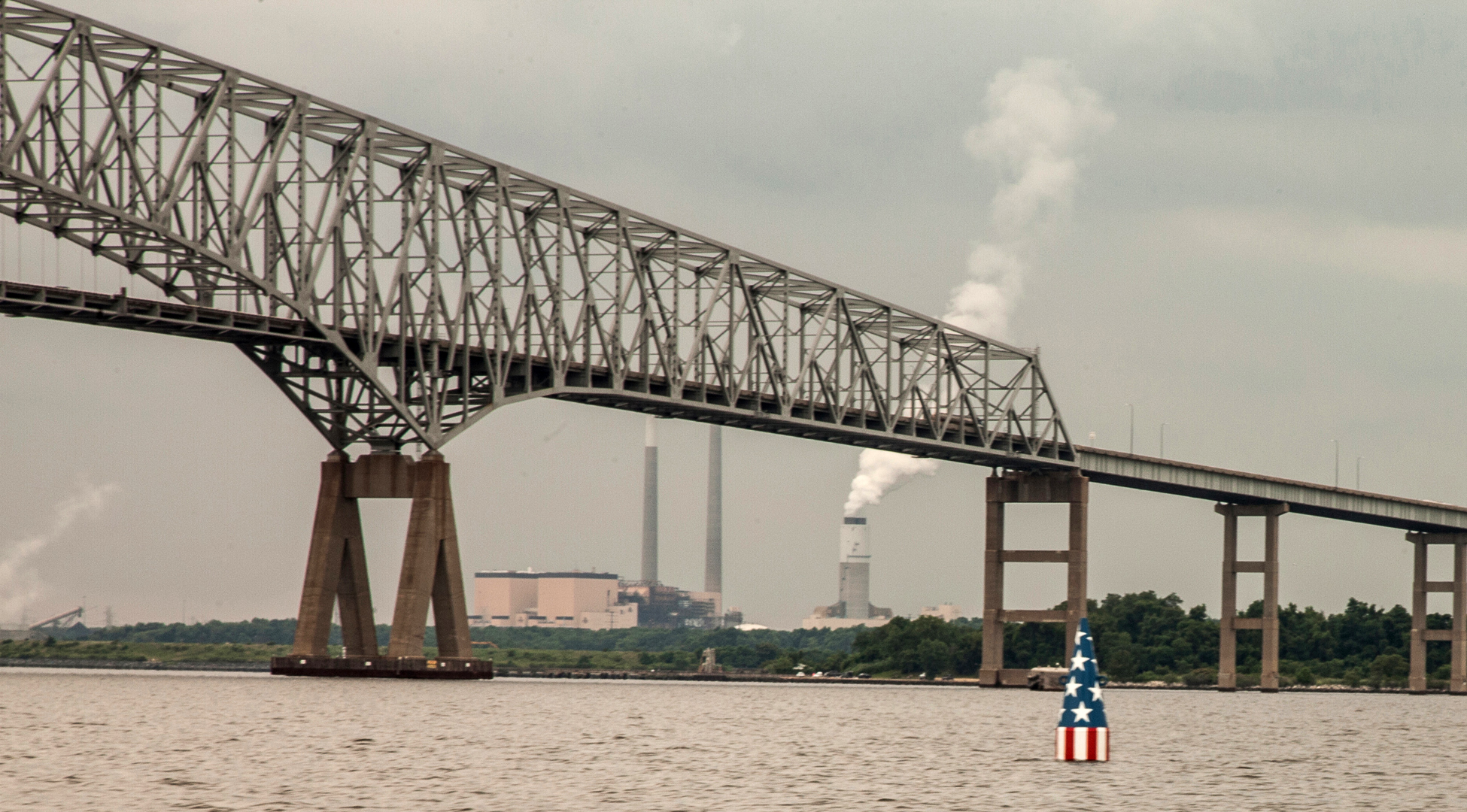
IMG_0428 by Shan Gordon.
Just beyond the spot where Francis Scott Key wrote of the bombardment of Ft. McHenry in 1814 (stars and stripes marker on the bottom right) another bombardment continues, this one 24 hours a day, every day with white plumes of pollution instead of the rockets red glare. Pollution from coal fired power plants in Maryland has killed more people than the Battle of Baltimore. A lot more.

A recent study from MIT estimates that pollution from coal fired power plants kill 1885 people a year in Maryland. In Baltimore, the study estimates that we dig 475 early graves each year for those who succumb to pollution from coal plants. Oh, say, the number of Americans killed during the Battle of Baltimore? 28. So where is our song for the 475 who lose their fight against coal plant pollution every year? In a city where we are grieving 182 murders, these 475 silent deaths go unseen, with no sirens, no blue lights, no detectives searching for the culprits. The cause of death or hospitalization will be listed as pulmonary failure, stroke, asthma, heart attack. The smoke plumes waving in the distance are unquestioned. The costs of care and suffering falls upon those who are unable to withstand the pollution, not to those who created it.

Remember how states took cigarette companies to court to reclaim medical costs due to cancer? If King Tobacco was required to pay for the damage it wreaks, why are aging, highly polluting coal burning plants still polluting for free? Why are we choosing to give a competitive advantage to plants which don’t purchase and use pollution controls over ones that do? Or over renewable energy sources which don’t pollute? What kind of capitalism is that?

Sure we need to meet our energy needs, but subsidizing inefficient and highly polluting power plants with our health and environment is unethical and unproductive. Here are some better ideas:

The Maryland Public Service Commission recently set a goal of saving 1.2 million megawatt hours of electricity per year. According to Mike Tidwell at Chesapeake Climate Action Network, meeting these goals would eliminated the need for a 460 megawatt coal fired power plant every two years.
Helping businesses and homeowners conserve energy enables us to reduce pollution while reducing energy bills for businesses and consumers.
Increasing renewable sources of energy like solar, wind and geothermal further reduce pollution while meeting our energy goals. Maryland needs to move quickly to escape it’s dependency on highly polluting coal fired power plants so we can improve the health of our citizens, our environment and our economy.

Comments

comments


Comments

Leave a Reply

Your email address will not be published. Required fields are marked *

This site uses Akismet to reduce spam. Learn how your comment data is processed.