

• The Air Isn’t Fair

    The Air Isn’t Fair

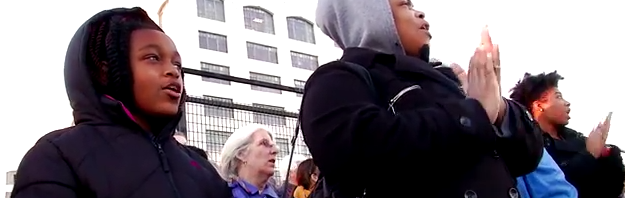
    The chants of “I can’t breathe” have faded from our streets, but there are many who still suffer from polluted air in our communities, homes, and schools.

    Cool Green Schools is creating a network of air quality monitoring at schools across different communities in Maryland. We are offering over 200 air quality monitors to schools so their students can study the indoor and outdoor air quality at their schools.

    We don’t stop there. We help students to identify and reduce asthma triggers, how to build low-cost air filters, and how to benchmark the environmental conditions at their schools and homes.

    Why is this important?

    The health of our students doesn’t start or end at our school doors. When our students learn to identify and reduce asthma triggers at school, they can create healthier conditions as their schools and apply these skills to their homes, where they spend even more of their time.

    What can we gain?

    Students will learn to study and improve their environments with professional tools and scientific methods.

    We expect to lower asthma-related absences and improve student performance.

    Our network of monitors will give us a much better understanding of air quality in different neighborhoods and schools.

    To join this project, please contact:

    Shan Gordon Cool Green Schools cell: 410-336-8239 shan@coolgreenschools.org

  • Celebrating Earth Day Gifts

    The chants of “I can’t breathe” have faded from our streets, but there are many who still suffer from polluted air in our communities, homes, and schools.

    Cool Green Schools is creating a network of air quality monitoring at schools across different communities in Maryland. We are offering over 200 air quality monitors to schools so their students can study the indoor and outdoor air quality at their schools.

    We don’t stop there. We help students to identify and reduce asthma triggers, how to build low-cost air filters, and how to benchmark the environmental conditions at their schools and homes.

    Why is this important?

    The health of our students doesn’t start or end at our school doors. When our students learn to identify and reduce asthma triggers at school, they can create healthier conditions as their schools and apply these skills to their homes, where they spend even more of their time.

    What can we gain?

    Students will learn to study and improve their environments with professional tools and scientific methods.

    We expect to lower asthma-related absences and improve student performance.

    Our network of monitors will give us a much better understanding of air quality in different neighborhoods and schools.

    To join this project, please contact:

    Shan Gordon Cool Green Schools cell: 410-336-8239 shan@coolgreenschools.org

  • Community Research: A Catalyst for Social Impact?

    The chants of “I can’t breathe” have faded from our streets, but there are many who still suffer from polluted air in our communities, homes, and schools.

    Cool Green Schools is creating a network of air quality monitoring at schools across different communities in Maryland. We are offering over 200 air quality monitors to schools so their students can study the indoor and outdoor air quality at their schools.

    We don’t stop there. We help students to identify and reduce asthma triggers, how to build low-cost air filters, and how to benchmark the environmental conditions at their schools and homes.

    Why is this important?

    The health of our students doesn’t start or end at our school doors. When our students learn to identify and reduce asthma triggers at school, they can create healthier conditions as their schools and apply these skills to their homes, where they spend even more of their time.

    What can we gain?

    Students will learn to study and improve their environments with professional tools and scientific methods.

    We expect to lower asthma-related absences and improve student performance.

    Our network of monitors will give us a much better understanding of air quality in different neighborhoods and schools.

    To join this project, please contact:

    Shan Gordon Cool Green Schools cell: 410-336-8239 shan@coolgreenschools.org

Tag: incinerator

  • Burning Questions for MDE and Curtis Bay

    Burning Questions for MDE and Curtis Bay

    Protesters chant “MDE, enforce the law” and “Incinerator must go!” outside of the offices of the Maryland Department of the Environment in Baltimore. The protesters said that Energy Answers had failed to meet the conditions of their permit and that the company should not be allowed to construct an incinerator under an expired permit. Only…

  • Energy Answers Questioned. Why Students Are Fighting a Planned Incinerator Near their School.

    Benjamin Franklin High School teacher, Kelly Klinefelter Lee thanks students for their critical thinking skills and citizenship as they continue to study and object to the proposed Energy Answers Incinerator. The proposed incinerator would be built on property a mile from the school and would burn waste including car tires and car parts from Maryland…

  • Protest March Against Energy Answers Incinerator

    Students at Benjamin Franklin High School lead protest of the Energy Answers Incinerator planned for construction at a site a mile from the school. Students fear that the incinerator will bring waste including car parts and car tires from other other states and will add lead, mercury and fine particulate pollution to their neighborhood that…

  • Burning Issues – Curtis Bay, Maryland

    Burning Issues – Curtis Bay, Maryland

    Testimony on whether the Public Service Commission should allow the largest incinerator in the nation to be built at Curtis Bay, Maryland, where two schools are located within a mile.